As global warehouses face tighter space, faster delivery expectations, and rising labor costs, Stacking Systems are becoming strategic infrastructure. In 2026, buyers will compare more than storage density. They will examine throughput, load stability, software integration, maintenance access, energy use, and long-term adaptability. The right choice may combine pallet racking, automated storage and retrieval systems, shuttle technology, vertical lifts, and mobile robots.
Peter Wurman, co-founder of Kiva Systems, said, “The shelves come to the workers, not the workers to the shelves.” That idea still matters. It shows how system design can reduce unnecessary travel and improve daily productivity. However, automation is not automatically the best answer. A high-speed system can become expensive if product profiles change, spare parts are unavailable, or local technicians lack training. Buyers should test real carton sizes, pallet weights, aisle clearances, and peak-season demand before approving a design. Small details matter.
There is no universal winner.
The strongest 2026 solutions will balance capacity with resilience. Global buyers should request measurable performance data, reference-site evidence, safety documentation, software demonstrations, and clear service commitments. They should also review regional installation standards and facility conditions with qualified engineers. Some forecasts may sound impressive but remain unproven in a buyer’s actual environment. That is the uncomfortable part. A reliable Stacking Systems strategy must leave room for human oversight, future expansion, and honest reassessment after commissioning. This guide explores the leading system types, their practical strengths, and the trade-offs buyers should understand before investing.
A stacking system is the planned way goods are placed, supported, and retrieved during storage or transit. It connects pallet dimensions, load weight, packaging strength, aisle width, and handling equipment. In global supply chains, that connection matters. A stable stack can reduce damage during ocean transport, repeated transfers, and uneven warehouse operations. A poor design can turn minor packaging weakness into major loss. Not glamorous, but decisive.
For 2026 purchasing decisions, leading options include block stacking, selective pallet racking, drive-in racking, double-deep storage, and mobile racking. Block stacking suits uniform loads with fast turnover and limited equipment variation. Selective racking gives each pallet direct access, although it uses more floor space. Drive-in designs increase density for similar products, but inspection and stock rotation become harder. Double-deep and mobile systems save space, yet they demand accurate inventory control and compatible lifting equipment. The top system is not universal. That is where many comparisons fail.
Experienced buyers should request load tests, pallet drawings, temperature data, and maintenance records before approval. They should also check local installers, spare-part access, worker training, and emergency procedures. A cold warehouse may need different protection from a humid port facility. Sensors can track movement and impact, but they do not replace physical inspections. I would question any forecast promising maximum density without discussing retrieval time. Capacity looks good on paper. Operations decide its real value.
Stacking systems determine how efficiently goods use warehouse height, floor space, labor, and handling equipment. The chart compares representative maximum storage levels commonly used in global supply-chain facilities. Actual capacity depends on pallet dimensions, load weight, building height, fire codes, and equipment specifications.
High-bay automated storage and retrieval systems generally provide the greatest vertical utilization, while block stacking offers the lowest equipment complexity and investment. Selective and drive-in racking remain widely applicable choices for mixed-SKU and high-density inventory operations.
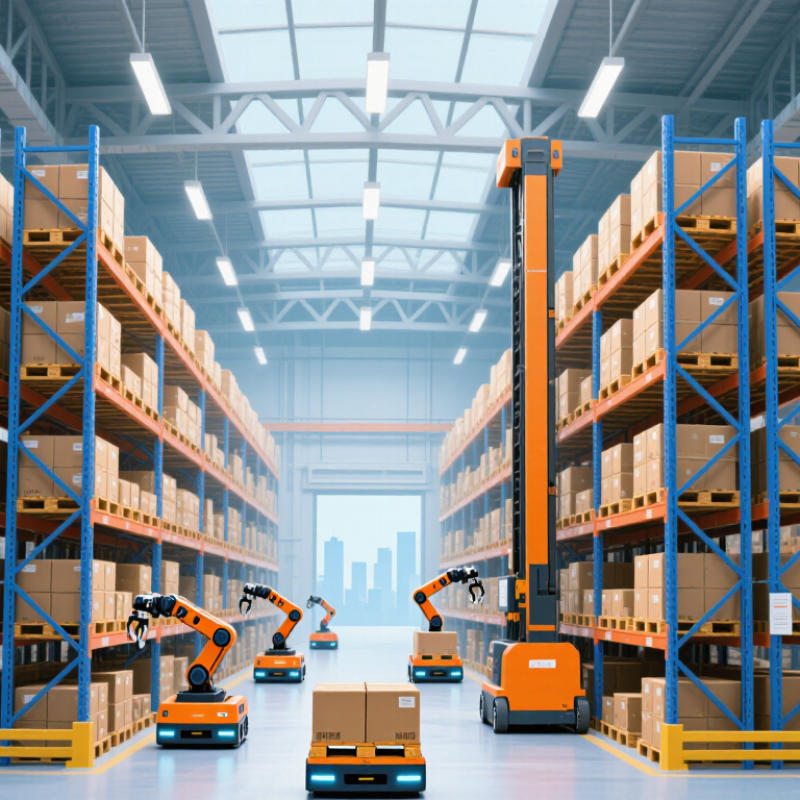
In 2026, leading stacking systems combine automated storage, robotic handling, and real-time software. High-density systems use shuttle robots to place pallets in narrow aisles. Autonomous mobile robots can move goods between storage zones and packing areas. Machine vision checks pallet position, labels, and damaged packaging. This reduces manual errors during busy shifts. It is not flawless. Dust, poor lighting, and irregular pallets still create practical problems.
Digital twins are becoming valuable for testing warehouse layouts before installation. Buyers can model traffic, energy use, retrieval times, and emergency access. Artificial intelligence can forecast demand and adjust storage locations. Edge computing also supports faster decisions when network connections become unstable. Energy-efficient motors and regenerative braking matter for facilities operating around the clock. System interoperability remains essential, especially when warehouses use different equipment and software platforms.
Tips: Request performance data from comparable facilities, not only laboratory tests. Check service response times in your region. Ask how the system handles power loss, blocked lanes, and manual recovery. Review worker training, safety sensors, and maintenance access carefully. A cheaper system may become expensive when upgrades are difficult. Pilot testing is wise, although it can slow purchasing decisions.
Global buyers are comparing stacking systems by throughput, floor space, labor needs, and installation risk. Selective pallet racking remains the most adaptable choice. It offers direct access to every pallet. However, it usually needs wider aisles and more floor area.
Drive-in racking increases density for uniform products, while push-back systems provide better selectivity.
Pallet-flow systems support first-in, first-out rotation, making them useful for dated inventory.
Automated storage and retrieval systems can improve consistency, but they require stronger data discipline and higher technical support.
The 2024 MHI Annual Industry Report found that 55% of supply-chain professionals planned to increase technology investment. That figure supports growing interest in automated stacking. Yet, automation is not automatically the best answer.
International buyers should compare local service coverage, spare-part access, operator training, and seismic requirements. EN 15635 and ANSI/RMI MH16.1 provide useful safety references for rack inspection and design.
A practical specification should state pallet dimensions, maximum load, beam levels, forklift type, and expected daily movements. Small errors matter. A 20-millimeter pallet difference can affect clearances, sensors, and loading stability.
Warehouse audits also reveal a common weakness: buyers compare quoted capacity but overlook floor flatness and fire-protection changes. That assumption can fail.
The strongest 2026 system is not the most automated one. It is the system that matches product rotation, building limits, and dependable local support.
What Are the 2026 Top Stacking Systems for Global Buyers?
Global buyers are prioritizing stacking systems that balance capacity, safety, cost, and sustainability. Selective pallet racking remains practical for mixed inventories because workers can reach every pallet directly. High-density drive-in systems store more goods, but they need disciplined loading and compatible pallets. Mobile racking can increase floor utilization, although installation costs and maintenance requirements are higher.
Capacity should never be measured alone. During warehouse assessments, I check pallet dimensions, aisle width, forklift turning space, and floor strength. A narrow aisle may appear efficient, yet poor traffic control can create collision risks. Guardrails, locking mechanisms, load labels, and routine inspections are essential. Small failures matter. One damaged upright can affect an entire bay.
Cost analysis should include energy, repairs, training, and future expansion. Modular steel systems often support gradual growth and reduce replacement waste. Reusable pallets and recycled steel can improve sustainability, but transport distances also influence emissions. Buyers should request verified material data instead of accepting broad environmental claims. Software-supported monitoring may improve stock accuracy and reduce unnecessary handling. However, technology does not correct weak procedures or careless loading. Local engineering rules, worker training, and independent safety reviews should guide the final decision. A cheaper system can become expensive when it restricts access, increases damage, or requires frequent redesigns.
What Are the 2026 Top Stacking Systems for Global Buyers?
Selecting a stacking system starts with product behavior, not machine speed. Robotic palletizers suit mixed-SKU warehouses, irregular cartons, and frequent layout changes. Conventional layer palletizers remain effective for stable, high-volume products. Collaborative palletizers fit smaller facilities, but slower cycles may disappoint during seasonal peaks. Gantry systems can handle heavy loads and wide pallet patterns with consistent accuracy.
The International Federation of Robotics reported 541,302 industrial robots installed worldwide in 2023, a 10% annual increase. This supports robotics growth, but it does not guarantee a return on investment. The MHI 2024 Annual Industry Report found that 55% of supply-chain professionals planned robotics or automation adoption within one to two years. Labor availability, maintenance skills, and local service access still influence the final choice. Technology alone is not enough.
For bags, fragile cartons, and unstable loads, buyers should request adjustable gripping and controlled compression. Vision-guided systems manage changing patterns, while fixed layer machines often simplify maintenance. Export pallets require testing under vibration, humidity, and temperature changes. Field project reviews often expose one overlooked weakness: pallet quality. A precise stack still fails on warped boards. Buyers should test real products, not sample cartons. That extra test feels inconvenient. It can prevent costly surprises.
Modern systems combine shuttle robots, mobile robots, machine vision, and real-time software. They place pallets in narrow aisles. They also move goods between storage and packing areas.
Cameras check pallet positions, labels, and damaged packaging. This reduces manual mistakes during busy shifts. Dust and poor lighting can still confuse the system.
Robotic palletizers work well with mixed product types and irregular cartons. They adapt when warehouse layouts change frequently. Their performance may drop during extreme seasonal peaks.
Layer palletizers suit stable products with high, predictable volumes. They often simplify maintenance and operation. They are less flexible with changing pallet patterns.
They can fit smaller facilities with limited space. Their slower cycles may disappoint during peak periods. Check actual hourly demand before choosing one.
Test real products, not only sample cartons. Include bags, fragile cartons, unstable loads, and warped pallets. A precise stack can still fail on poor pallet boards.
Digital twins model warehouse traffic, energy use, retrieval times, and emergency access. They help compare layouts before installation. The model is useful, but real conditions may differ.
Ask about power loss, blocked lanes, manual recovery, and maintenance access. Review safety sensors and worker training. Service response times matter. A cheaper system may become expensive after difficult upgrades.
In 2026, Stacking Systems will play a central role in improving storage density, material flow, and supply chain resilience for global buyers. These systems include manual, automated, mobile, and digitally connected solutions designed to organize goods vertically while supporting faster handling and better use of warehouse space. Emerging technologies such as robotics, sensors, artificial intelligence, real-time monitoring, and energy-efficient equipment are making stacking operations more precise, adaptable, and transparent across international supply networks.
When comparing options, buyers should evaluate load capacity, stacking height, operational speed, safety features, maintenance requirements, total cost of ownership, and environmental performance. The most suitable solution depends on the application, including warehouse distribution, manufacturing, cold storage, retail fulfillment, or high-volume international logistics. A careful assessment of facility layout, product characteristics, labor availability, local infrastructure, and long-term growth plans can help organizations select Stacking Systems that balance productivity, reliability, sustainability, and cost efficiency.

Maobang Storage