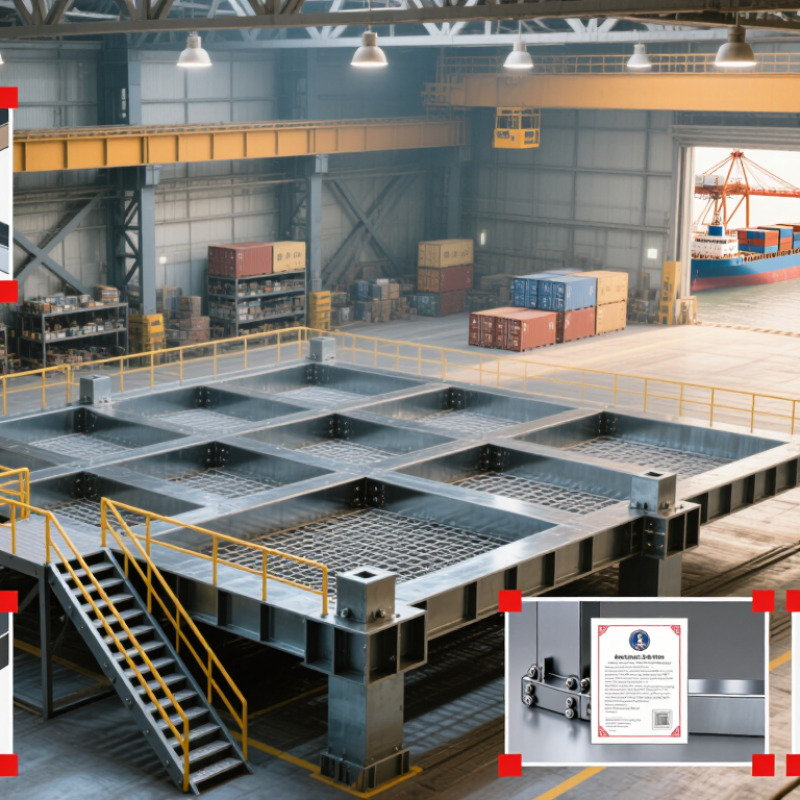
Choosing the best Steel Platforms in China requires more than comparing prices on a supplier website. Global buyers should examine load capacity, platform dimensions, surface treatment, welding quality, and delivery capability. A strong platform must remain stable under repeated use, not only look polished in product photos.
Experienced sourcing teams usually request drawings, material certificates, inspection records, and recent project references. They may also review factory equipment, worker training, and quality-control procedures. Hot-dip galvanized steel can help resist corrosion in outdoor or coastal environments. Powder coating may suit cleaner indoor applications. The right finish depends on exposure, maintenance, and budget.
Reliable Chinese manufacturers often support custom stairs, handrails, grating, access ladders, and modular sections. Clear communication matters. So does packaging. Bent edges or damaged coatings can create problems after a long sea shipment. Buyers should confirm tolerances, testing methods, Incoterms, lead times, and after-sales support before placing an order.
The “best” supplier is not always the cheapest. That assumption deserves reconsideration. A low quotation may exclude engineering changes, inspection, or stronger materials. Some suppliers also present impressive certifications without explaining their scope or validity. Independent verification remains sensible.
Small details matter.
This guide will compare practical factors behind leading Steel Platforms suppliers in China. It will focus on manufacturing experience, technical competence, export reliability, customization, and transparent communication. The aim is not to promote one factory blindly. It is to help global buyers make a safer, evidence-based decision for warehouses, plants, construction sites, and industrial facilities.
China’s steel sourcing platforms are valuable because they connect overseas buyers with mills, processors, stockists, and inspection services. A buyer can compare coil, plate, pipe, bar, and fabricated parts in one workflow. This reduces scattered emails and exposes differences in grade, thickness, tolerance, and delivery terms. Visibility matters. Yet low prices alone prove little.
Experienced buyers request mill certificates, heat numbers, coating details, and dimensional reports before approving an order. Reliable platforms support document checks, supplier verification, sample review, and third-party inspections.
They also clarify Incoterms, packaging, port arrangements, and customs paperwork. A photo of strapped bundles is useful, but it cannot replace a physical inspection. I have learned that response speed can hide weak technical control. Uncomfortable lesson.
The strongest platforms help buyers filter suppliers by production equipment, export experience, and relevant standards. They preserve inquiry records, quotations, revisions, and inspection evidence. This creates an audit trail when specifications change.
Still, platform information may be incomplete or outdated. Buyers should verify critical claims directly and allow time for an independent review. A careful process costs more upfront. It can prevent costly rework, delayed vessels, and material that fails on arrival.
For global buyers, comparing China’s steel trading platforms requires more than checking product prices. The World Steel Association’s October 2024 Short Range Outlook forecast global steel demand at about 1.75 billion tonnes in 2024. China remains the largest production market, so platform coverage matters. However, a large supplier list can mislead.
I compare platforms through five practical filters: mill traceability, specification accuracy, export experience, inspection support, and dispute handling. A reliable platform should show steel grade, dimensions, tolerance, coating weight, production location, and test certificates. The OECD’s 2024 steel capacity report also highlights continuing global overcapacity concerns. This makes supplier verification essential, especially when quotations look unusually low. Ask whether certificates come from the actual producing mill. Request recent batch records, not only sample documents. It takes longer, but prevents expensive surprises.
Tips: Build a comparison sheet before contacting suppliers. Record response time, minimum order quantity, payment terms, Incoterms, inspection costs, and loading port. Check whether prices include cutting, packing, inland transport, and export documentation. The International Energy Agency reports that steel remains a major industrial emissions source, so buyers may also compare emissions data and recycled content. These figures are not always consistent. That is a weakness worth acknowledging. A platform with fewer suppliers but clearer evidence may be safer than a crowded marketplace. Verify independently.
| Comparison Dimension | Integrated B2B Steel Marketplace | Specialized Steel E-Commerce Platform | Mill-Linked Procurement Platform | Commodity Trading and Spot-Market Platform | Export-Oriented Supplier Directory |
|---|---|---|---|---|---|
| Primary Function | Connects buyers with multiple steel suppliers and supports quotation, ordering, and fulfillment. | Focuses on online sales of selected steel products, often with standardized specifications. | Links buyers more directly with steel mills or authorized production channels. | Facilitates spot transactions, inventory matching, and market-based purchasing. | Provides supplier information and inquiry channels; transactions are usually completed offline. |
| Typical Product Coverage | Wide range of carbon steel, stainless steel, galvanized steel, coated steel, pipes, bars, and plates. | Usually concentrated on several product groups such as coils, sheets, pipes, or long products. | Products manufactured according to mill production capability, including standard and project grades. | Commonly covers in-stock coils, sheets, plates, bars, pipes, and other warehouse materials. | Coverage varies by listed supplier and may include both standard and customized steel products. |
| Best Fit for Buyers | Importers, distributors, fabricators, and industrial buyers comparing several supply options. | Buyers seeking repeat purchases of clearly specified products through a digital ordering process. | Large-volume buyers, project purchasers, and customers requiring mill documentation. | Buyers prioritizing available inventory, short lead times, or price-sensitive spot purchases. | Experienced buyers capable of independently evaluating suppliers and managing negotiations. |
| Product Specification Support | Usually supports grade, dimensions, thickness, width, surface, tolerance, quantity, and packaging requirements. | Strong for predefined specifications; special requirements may require manual confirmation. | Suitable for detailed technical specifications, production tolerances, and project standards. | Most effective for available specifications; custom production may require a separate order. | Specification quality depends on the supplier’s technical response and documentation. |
| Quotation Transparency | Often allows comparison of quotations from different suppliers, although freight and taxes may be separate. | Prices may be displayed for standard items or provided after an online inquiry. | Prices are commonly quotation-based because volume, grade, production schedule, and delivery terms affect cost. | Prices generally reflect inventory conditions, regional demand, and market fluctuations. | Price transparency is normally limited until the buyer contacts individual suppliers. |
| Minimum Order Quantity | Ranges from small trial quantities to full-container or bulk orders, depending on the supplier. | Often suitable for repeat standard orders, but minimum quantities differ by product and warehouse policy. | Usually more suitable for larger quantities because production planning and mill economics matter. | May support smaller lots when material is already available in stock. | Determined directly by each supplier; platform-level rules are usually limited. |
| Customization Capability | Can coordinate cutting, slitting, leveling, coating, machining, or packaging when suppliers provide these services. | Customization is available mainly when it is included in the platform’s product and processing scope. | Strong potential for production-based customization, subject to technical review and order volume. | Limited for immediate stock; more extensive processing may extend the delivery schedule. | Depends entirely on the capabilities of the selected supplier. |
| Quality Documentation | May provide mill test certificates, inspection reports, packing lists, and certificates of origin when agreed in the contract. | Documentation is generally available for standard products but should be confirmed before payment. | Usually well suited to mill certificates, heat numbers, inspection requirements, and project documentation. | Documentation depends on the stock owner and the traceability of the available material. | Documents must be requested and verified directly with the supplier. |
| Supplier Verification | May include business-license checks, factory information, transaction history, or third-party verification. | Often uses account, business-registration, or product-listing reviews; verification depth varies. | Verification should focus on mill authorization, production capacity, and traceable supply channels. | Requires additional checks on inventory ownership, material origin, and warehouse records. | Listing presence alone does not prove manufacturing capability or export reliability. |
| International Trade Support | May assist with commercial invoices, packing lists, export documents, customs coordination, and Incoterms. | Support is generally strongest for products already structured for export transactions. | Can support export orders but may require the buyer to coordinate freight, customs, or inspection separately. | International support varies significantly because many transactions are designed for domestic spot trading. | Usually provides introductions; buyers commonly manage compliance and shipping independently. |
| Common Delivery Terms | FOB, CFR, CIF, FCA, and other terms may be available depending on supplier and destination. | Export terms may be offered for standard products, subject to destination and order size. | FOB and CFR are common for mill-linked export orders, while other terms require negotiation. | Domestic warehouse delivery is common; export terms require separate logistics arrangements. | Delivery terms are negotiated directly with the selected supplier. |
| Payment Options | May include bank transfer, documentary payment, platform-secured payment, or staged payment by contract. | Payment methods are usually standardized for listed products and may include advance payment. | Payment is commonly arranged by sales contract and may involve deposit and balance milestones. | Payment may be required quickly because inventory and prices can change rapidly. | Payment protection depends on the buyer’s contract, bank, inspection, and supplier due diligence. |
| Lead-Time Profile | Combines ready stock and made-to-order supply; lead time depends on processing, production, and shipping. | Often efficient for listed inventory and repeat products with stable specifications. | Production orders may require longer planning time but can offer clearer manufacturing schedules. | Potentially fast for confirmed stock, subject to warehouse release and transport availability. | Lead time must be confirmed separately with each supplier. |
| Logistics Coordination | May coordinate inland trucking, container loading, port delivery, ocean freight, and shipment tracking. | Usually supports logistics for its standard sales process, with scope varying by destination. | Can coordinate mill dispatch and export logistics, but buyers may need their own freight forwarder. | Strong for domestic warehouse movement; international freight support may be limited. | Typically leaves transportation planning to the buyer and supplier. |
| Price Volatility Exposure | Medium to high; quotations should include validity periods because steel prices and freight can change. | Medium; displayed prices may change with raw-material costs, inventory, and delivery location. | High for production orders because prices may be linked to raw materials and market conditions. | High; spot prices can change quickly according to regional inventory and demand. | High uncertainty until a formal quotation is issued. |
| Key Buyer Checks | Confirm supplier identity, product standards, inspection terms, Incoterms, payment security, and total landed cost. | Check specification accuracy, inventory status, return or claim procedures, and documentation availability. | Verify mill relationship, production schedule, technical compliance, certificate traceability, and contract terms. | Confirm material ownership, warehouse location, condition, weight, inspection evidence, and release procedure. | Verify legal registration, export experience, factory or warehouse evidence, references, and contract protection. |
| Overall Suitability for Global Buyers | High when the buyer needs supplier comparison and coordinated export services. | Medium to High for standardized, repeatable, and clearly specified purchases. | High for larger orders requiring direct production control and technical documentation. | Medium when quick access to confirmed inventory is more important than customization. | Medium to Low unless the buyer has strong independent verification and trade capabilities. |
Evaluation note: Platform capabilities, supplier qualifications, prices, inventory, payment terms, and delivery options can change by product, order volume, destination, and contract. Global buyers should verify current information through official business documents, product certificates, third-party inspection, and written commercial terms before placing an order.
China’s steel platforms serve global buyers with far more than basic mill listings. The World Steel Association reported approximately 1.89 billion tonnes of crude steel production worldwide in 2023. China contributed about 1.02 billion tonnes. This scale supports broad online sourcing, but product verification still requires professional judgment.
Common offerings include hot-rolled coils, cold-rolled sheets, galvanized steel, stainless steel, rebar, wire rod, structural sections, and welded or seamless pipes. Buyers can often request custom widths, thicknesses, surface finishes, grades, and cutting dimensions. Some platforms also provide steel fabrication, CNC cutting, welding, slitting, bending, coating, and private-label packaging. Small details matter. A mill certificate alone may not prove shipment quality.
Reliable platforms usually connect orders with inspection, sampling, container loading, export documentation, and freight coordination. Independent inspection can check chemical composition, tensile strength, dimensions, coating weight, and surface defects. The International Energy Agency notes that steel production remains highly emissions-intensive, so some suppliers now provide product carbon data and recycled-content statements. These claims need evidence, not attractive wording.
Service depth varies widely. Some platforms respond quickly but offer weak technical support. Others understand standards such as ASTM, EN, JIS, or GB, yet communicate slowly. Buyers should compare tolerances, test methods, payment protection, lead times, and after-sales handling before placing an order. I would not rely on the lowest quotation alone. Cheap steel can become expensive after rework, delays, or rejected inspection.
What Are the Best Steel Platforms in China for Global Buyers?
Choosing a steel platform requires more than comparing online listings. Verify the supplier’s legal registration, factory address, export history, and production capacity. Request a live video tour, then compare the equipment shown with the stated product range. A third-party factory audit adds useful evidence, but it is not perfect. Even experienced buyers can miss subcontracted processing.
Quality checks should begin with a detailed purchase specification. Confirm steel grade, dimensions, coating thickness, surface condition, load capacity, welding method, and applicable standards. Ask for recent mill test certificates and independent inspection reports. Test samples before placing a large order. Check weld penetration, bolt fit, straightness, and corrosion protection. Small defects often appear after installation. That is expensive.
Pricing needs a complete breakdown. Compare material cost, fabrication, packaging, inland transport, freight, insurance, payment terms, and delivery dates. Clarify the Incoterm and quotation validity period. The lowest offer may use thinner steel or exclude essential inspection costs. Certifications also need verification. Check the issuing body, certificate number, scope, expiry date, and whether it covers the actual factory. ISO 9001 can support process control, but it does not prove every platform is safe. Ask technical questions and keep written records. Trust evidence, not confidence.
Structural steel selection should be based on load requirements, traceability, welding procedures, and export compliance rather than supplier claims alone.
Ordering steel from China involves more than comparing a listed price. The World Steel Association reported 1.89 billion tonnes of crude steel production worldwide in 2023, with China producing about 1.02 billion tonnes. This scale creates choice, but quality can vary between mills, traders, and processing centers. Ask for the exact grade, dimensions, tolerance, coating weight, and applicable standard. Request a mill test certificate before shipment, not after arrival. Independent pre-shipment inspection is also useful, especially for large orders.
Shipping deserves equal attention. UNCTAD’s Review of Maritime Transport 2024 states that maritime transport carries over 80% of global merchandise trade by volume. A small documentation error can delay a full container at the destination port. Confirm the HS code, commercial invoice, packing list, certificate of origin, and agreed Incoterm. For coils, plates, and long products, clarify lashing methods and moisture protection. A wet voyage can leave reddish stains under plastic wrapping. They may not mean structural failure, but buyers should not guess.
Tips: Compare offers using landed cost, not only the steel price. Include freight, insurance, duties, inspection, port charges, and inland delivery. Check whether the quoted weight is theoretical or actual. Keep payment milestones linked to inspection documents. I have seen buyers accept vague phrases like “standard quality”; that wording is weak. It should be replaced with measurable requirements, approved samples, and a written tolerance table. Shipping dates also need caution, because port congestion and vessel changes can disrupt optimistic schedules.
Compare mill traceability, specification accuracy, export experience, inspection support, and dispute handling. Check steel grade, dimensions, tolerances, coating weight, and production location. A shorter supplier list may be safer. Verify independently.
Common products include hot-rolled coils, cold-rolled sheets, galvanized steel, stainless steel, rebar, wire rod, sections, and pipes. Buyers may request custom widths, thicknesses, finishes, and cutting sizes. Product variety is useful, but it proves nothing about quality.
Request a mill test certificate, recent batch records, packing details, and export documents. Confirm that certificates belong to the actual producing mill. Sample papers can look convincing. They may not match the shipment.
Independent inspection can check chemical composition, tensile strength, dimensions, coating weight, and surface defects. It can also verify loading and packaging conditions. Inspect large orders before shipment. It costs more, sometimes.
Compare landed cost, not only the listed steel price. Include freight, insurance, duties, inspection, port charges, and inland delivery. Check cutting, packing, and documentation fees. The lowest quotation can become expensive after rework.
Confirm the HS code, invoice, packing list, origin certificate, and agreed delivery term. Clarify lashing and moisture protection for coils, plates, and long products. Plastic wrapping may trap moisture during a wet voyage. Rust stains deserve investigation.
Replace vague wording such as “standard quality” with measurable requirements. Record grade, dimensions, tolerances, test methods, coating weight, and approved samples. Link payment milestones to inspection documents. Written details help, though I would still recheck everything.
Buyers may compare emissions data and recycled content when available. Ask for evidence supporting environmental claims. These figures are not always consistent across suppliers. That weakness matters. Use them carefully, not blindly.
China’s Steel Platforms offer global buyers a practical way to access a broad network of mills, processors, and export suppliers. Their value comes from product variety, competitive pricing, manufacturing capacity, and integrated services such as sourcing, customization, inspection, documentation, and logistics coordination. When comparing platforms, buyers should assess supplier coverage, product specifications, transaction transparency, response speed, customer support, and the availability of independent quality controls.
These platforms may provide carbon steel, stainless steel, alloy steel, coils, sheets, bars, pipes, structural materials, and fabricated components for different industries. Before placing an order, global buyers should verify supplier registration, production capability, quality systems, test reports, relevant certifications, and clear pricing terms. It is also important to confirm minimum order quantities, lead times, packaging standards, payment arrangements, insurance, shipping routes, customs documents, and delivery responsibilities. Careful due diligence and precise technical communication can help buyers reduce risk, control costs, and build reliable international steel supply relationships.

Maobang Storage