10 Tips for Buying Carton Flow Storage Systems

Time:2026-10-21 Author:Liam
0%

Buying carton flow storage systems can improve picking speed, stock rotation, and workplace visibility. Yet the right choice depends on more than shelf capacity. Carton Flow Storage must match your products, operators, facility, and replenishment routine. A system designed for small cartons may struggle with irregular packaging or heavy cases.

Experienced warehouse managers usually begin with real operating data. Record carton dimensions, product weights, daily order lines, and replenishment frequency. Measure aisle widths and available ceiling height. Measure twice. These details reveal whether gravity lanes will support smooth movement or create jams. A practical trial with representative cartons can expose problems that brochures often overlook.

The following ten tips examine frame quality, roller selection, lane depth, ergonomics, safety features, and future expansion. They also address supplier support, installation requirements, and total ownership costs. Price matters, but downtime matters more. Ask vendors for load ratings, maintenance guidance, and references from comparable facilities. Reliable suppliers should explain their assumptions clearly and welcome technical questions.

No system is perfect. Some businesses overestimate future growth and purchase unnecessary capacity. Others choose narrow lanes without considering awkward cartons. That decision may look efficient on a floor plan, then slow every picking shift. Careful evaluation reduces these risks. Still, warehouse conditions change, so a review after installation remains valuable. Observing real operators during a busy shift may provide better evidence than polished projections.
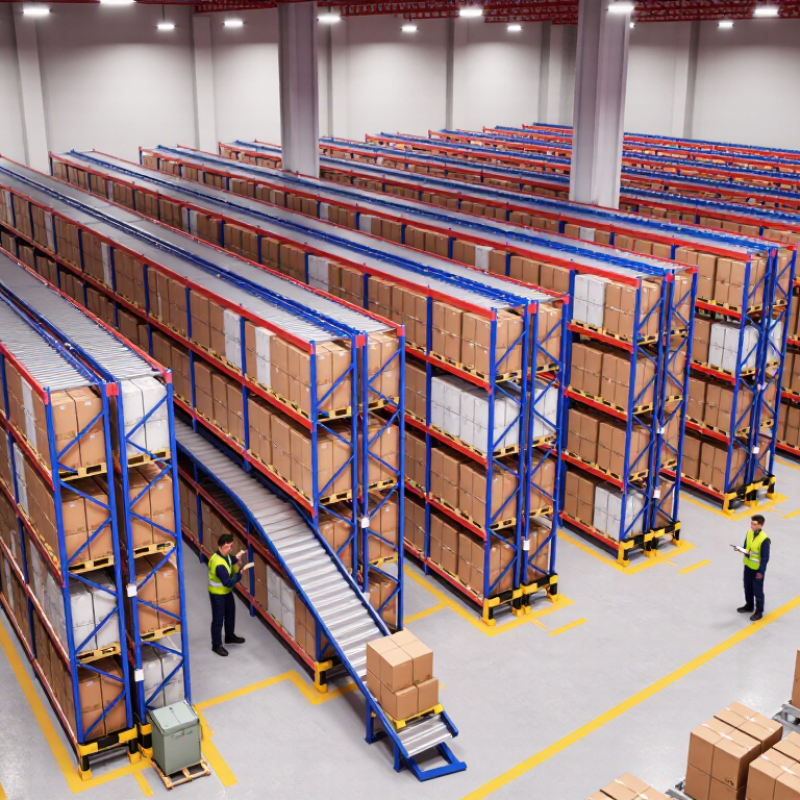
10 Tips for Buying Carton Flow Storage Systems

Define Your Storage Requirements and Inventory Profile

Before selecting a carton flow storage system, define what must move through it. Record each SKU’s dimensions, weight, packaging, daily demand, and replenishment frequency. Separate fast, medium, and slow movers using actual order history, not intuition. A product that looks popular may only reflect a temporary promotion.

MHI’s 2024 Annual Industry Report reported that 55% of supply chain professionals expect technology and innovation investment to increase over the next two years. That investment should begin with reliable inventory data. Review at least 12 months of transactions when possible. Note seasonal peaks, damaged cartons, expiration controls, and case-pack quantities. Carton flow lanes work best when products have predictable movement and consistent front-facing access.

Measure the available space carefully. Capture beam height, aisle width, operator reach, and replenishment paths. Then calculate required lanes from average inventory and peak demand. Leave room for product variation. Too little capacity creates frequent replenishment trips. Too much capacity wastes valuable storage space.

Be practical.

A useful first design can still be wrong. We once treated average demand as the main sizing factor, while peak-week volume created the real constraint. Recheck assumptions with warehouse operators. Their experience often reveals blocked lanes, awkward carton handling, or replenishment delays that spreadsheets miss. Record these observations before finalizing the system.

Evaluate Carton Flow System Design and Load Compatibility

10 Tips for Buying Carton Flow Storage Systems

Evaluate the system design before comparing prices. Measure carton length, width, height, and weight across your actual product range. A lane built for one carton size may perform poorly with another. Check roller spacing, lane depth, shelf pitch, and replenishment access. The flow angle must support movement without causing cartons to slide too quickly. Small differences matter.

Tip 1: Test the heaviest and lightest cartons. Confirm that both move smoothly and stop safely. Tip 2: Inspect the carton base. Warped cardboard, weak seams, or uneven bottoms can interrupt flow. Tip 3: Ask for load ratings by shelf, bay, and frame. Do not rely on one overall capacity number. Tip 4: Review how operators remove cartons. Poor access creates reaching, collisions, and slower picking. Tip 5: Match lane width closely to carton dimensions. Excess space can allow cartons to turn sideways.

In practical evaluations, trial loading is more reliable than reading specifications alone. Place real cartons on a sample lane and observe movement during repeated picking. Measure the gap between cartons after each removal. Also check replenishment from the rear, especially when stock is added during busy periods. I have seen teams overlook seasonal packaging changes. That mistake can force expensive adjustments later. Leave some capacity for variation, but avoid designing every lane around an unlikely maximum. A balanced system protects product quality, supports consistent workflow, and remains easier to maintain.

Compare Space Utilization, Accessibility, and Workflow Efficiency

10 Tips for Buying Carton Flow Storage Systems

Carton flow storage should earn its footprint, not merely fill it. Compare usable locations, aisle width, replenishment space, and clear access to every carton. The 2024 MHI Annual Industry Report identifies labor shortages as a continuing concern for supply chain leaders. A system that reduces walking can therefore protect both capacity and labor hours. Measure real carton dimensions, including damaged packaging. Small errors create large gaps.

Accessibility depends on product velocity. Place fast-moving cartons near the pick face and reserve slower stock for higher or deeper positions. Carton flow lanes support first-in, first-out rotation when replenishment enters from the rear. That matters for dated goods. The 2023 Warehousing Vision Study by Zebra Technologies reported that 58% of warehouse decision-makers planned to deploy automation by 2028. Automation may improve movement, but poor slotting still creates congestion.

Not magic.

Workflow efficiency requires observing people, not only counting storage positions. Time a picker from scan to handoff, then record replenishment interruptions and awkward reaches. Compare these results before and after a trial bay. Include dividers, lane labels, stop rollers, and adjustable pitch in the evaluation. Safety guidance from the U.S. Occupational Safety and Health Administration emphasizes controlling struck-by and material-handling risks; stable loads and clear aisles remain practical requirements. A trial can expose weaknesses. It may also challenge the original layout.

Assess Durability, Safety Features, and Maintenance Needs

Carton flow storage looks simple, but its rollers carry repeated loads every day. Durability depends on frame thickness, wheel material, beam connections, and the rated carton weight. I inspect these points with a loaded test carton, not an empty lane. OSHA 29 CFR 1910.176(b) requires stored materials to remain stable and secure. That principle matters when cartons are removed quickly. The 2024 MHI Annual Industry Report also identifies labor availability as a major warehouse challenge, making dependable, low-effort flow lanes more valuable.

Tip 1: Check the load rating at lane level. Do not rely only on the total bay capacity.

Tip 2: Test carton movement with real packaging. Rough cardboard can stop on small rollers.

Tip 3: Choose adjustable dividers for changing carton sizes. Fixed lanes often create wasted space. I would not assume heavier steel always means better performance. Poor alignment can damage a strong frame.

Tip 4: Inspect end stops, guide rails, and back guards. These parts prevent cartons from falling or striking workers.

Tip 5: Ask for inspection instructions and spare-part availability. HSE guidance in HSG76 recommends regular racking checks and annual inspections by a competent person.

Tip 6: Keep a simple maintenance log. Record bent rails, missing clips, noisy wheels, and slow lanes.

Tip 7: Clean rollers and remove broken packaging weekly. A small obstruction can increase picking force.

Tip 8: Review safety after every layout change.

Tip 9: Train workers to report unstable cartons.

Tip 10: Leave room for imperfect use; people will overload convenient lanes. That weakness deserves attention.

Calculate Total Cost and Plan for Future Expansion

10 Tips for Buying Carton Flow Storage Systems

Calculate the total cost before comparing purchase prices. Include frames, rollers, dividers, freight, installation, floor preparation, and safety inspections. Labor can surprise you. Request a detailed quotation with every accessory listed. Ask how replacement rollers and lane components are priced. Maintenance costs matter when several lanes operate daily.

Measure your cartons, including the largest and smallest sizes. Test their weight, shape, and packaging strength. A carton that looks stable may stop halfway down the lane. Record actual picking rates during busy shifts. Then estimate the number of lanes needed. Leave enough aisle space for safe replenishment and comfortable reaching. Consider lighting, labels, guardrails, and possible software changes. These small items affect the real budget.

Plan for future expansion before fixing the layout. Reserve floor space, electrical access, and a clear path for additional modules. A practical reserve is often 20 to 30 percent, but demand forecasts remain imperfect. I have seen warehouses outgrow new systems within two years. That mistake was avoidable. Choose adjustable lanes and common component sizes when possible. Confirm the floor can support future loads. Review the plan with warehouse operators, maintenance staff, and a qualified storage-system engineer. Their daily experience may expose problems that drawings miss. Shelves rarely fail on paper.

FAQS

What carton measurements should be checked before buying a flow storage system?

Measure carton length, width, height, and weight across your actual product range. Include damaged packaging.

How can I test whether cartons move safely?

Test the heaviest and lightest cartons on a sample lane. Watch their speed, stopping point, and movement after repeated picking. A poor test proves little.

Why does carton base condition matter?

Warped cardboard, weak seams, and uneven bottoms can catch on rollers. Rough packaging may require more picking force.

How should lane width and shelf pitch be selected?

Match lane width closely to carton dimensions. Excess space can let cartons turn sideways. Check shelf pitch for hand clearance.

What load ratings should be requested?

Ask for ratings by lane, shelf, bay, and frame. One overall capacity figure may hide weak individual lanes.

How can the system improve picking efficiency?

Place fast-moving cartons near the pick face. Measure walking time, awkward reaches, handoffs, and replenishment interruptions.

Does carton flow support stock rotation?

Rear replenishment can support first-in, first-out movement. This is useful for dated goods, but poor slotting still causes congestion.

Which safety and maintenance features deserve attention?

Inspect end stops, guide rails, back guards, clips, and wheel alignment. Clean rollers weekly and record bent rails or slow lanes.

Should the system be designed for the largest possible carton?

Leave capacity for seasonal variation, but avoid building every lane around an unlikely maximum. That wastes space.

What should happen before approving the final layout?

Run a trial bay with real cartons and repeated picking. Review access, replenishment, stability, and maintenance effort. The original layout may need revision.

Conclusion

Choosing the right Carton Flow Storage system begins with a clear understanding of your storage requirements, inventory profile, carton sizes, product turnover, and replenishment methods. Evaluate whether the system’s design can support your expected loads while providing smooth product movement and reliable access. Consider how lane depth, shelf configuration, and picking locations will affect space utilization, order accuracy, and workflow efficiency.

Durability and safety are also essential factors. Look for sturdy construction, secure components, clear load limits, and features that simplify inspection and maintenance. In addition to the initial purchase price, calculate installation, operating, repair, and replacement costs to understand the system’s total cost of ownership. Finally, select a flexible solution that can adapt to changing inventory volumes, new product dimensions, and future expansion. A well-planned Carton Flow Storage system can improve organization, reduce handling time, support safer operations, and deliver lasting value.

Liam

Liam

Liam is a dedicated marketing professional with a profound expertise in the industry, where he excels at highlighting the unique advantages of our core products. With a keen understanding of market trends and consumer needs, Liam frequently updates our company’s professional blog, providing......