Drive-in Storage remains a practical choice for global buyers seeking high-density pallet capacity. It uses fewer aisles than selective pallet racking. That difference can release valuable floor space in cold stores, food warehouses, and manufacturing facilities. However, density is not the only purchasing concern. Forklift access, pallet quality, load rotation, fire protection, and local building requirements can change the best solution.
This guide introduces ten types of Drive-in Storage and explains where each design may perform well. The comparison considers single-entry drive-in racks, drive-through systems, mobile-supported layouts, and other specialized configurations. Real warehouse conditions matter. A narrow aisle may improve capacity, yet it can slow loading during busy shifts. Uneven pallets may also damage guide rails or reduce storage stability. Small details matter.
Reliable selection should begin with verified load calculations, steel specifications, installation records, and clear warranty terms. Buyers should request drawings showing upright frames, rails, bracing, and forklift clearances. Local engineers should review seismic risks, floor strength, sprinkler access, and workplace safety requirements. Supplier experience is useful, but it should not replace independent checks. No ranking fits every warehouse. That is worth remembering. Some comparisons may overlook operator habits, future product changes, or maintenance access. A careful buyer should test assumptions with site measurements, pallet samples, and realistic traffic data before choosing a system.
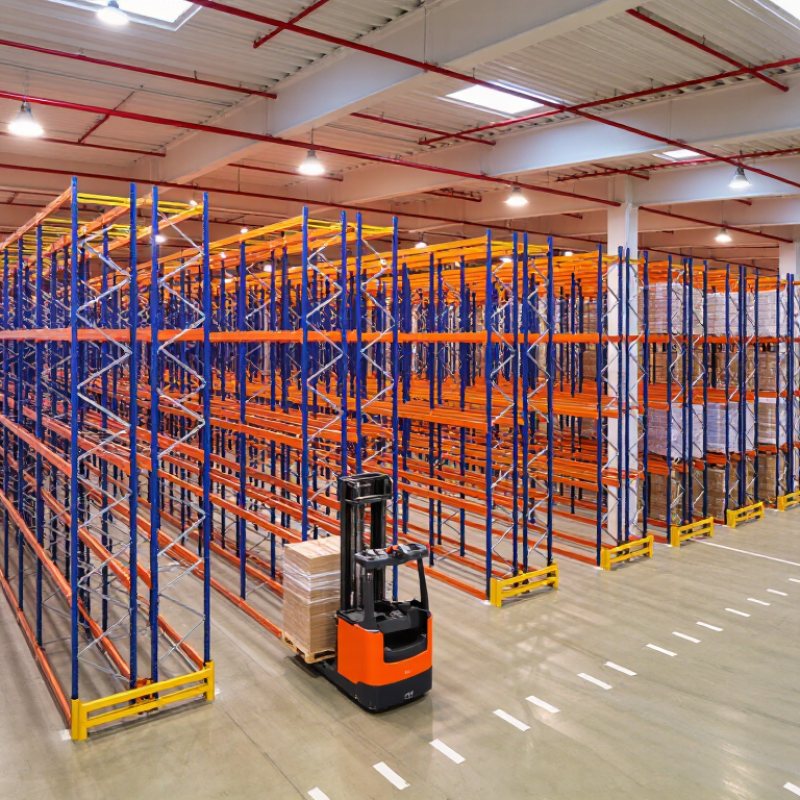
Drive-in storage is a high-density pallet racking system designed for warehouses holding large quantities of similar goods. Unlike selective racking, it removes most access aisles and uses the rack structure as a guided storage tunnel. A forklift enters the lane, places a pallet on support rails, then reverses carefully. The aisle disappears.
This layout usually follows a last-in, first-out pattern. The newest pallet enters behind the earlier ones, so the first pallet placed is removed last. Each lane may hold several pallets deep, making drive-in storage useful for seasonal inventory, packaged materials, and products with stable demand. Drive-through versions allow forklifts to load from one side and unload from the other, supporting first-in, first-out handling when stock rotation matters.
Safe operation depends on accurate design and disciplined driving. Rack height, pallet dimensions, load weight, forklift clearance, floor quality, and seismic conditions must be checked by qualified professionals. Operators should move slowly inside the tunnel and inspect rails, uprights, and pallet conditions regularly. A damaged pallet can affect an entire lane. That risk is easy to underestimate.
Drive-in storage is not perfect. It saves floor space but reduces immediate access to individual pallets. Poor product grouping can create delays, even when capacity looks impressive. In practice, the best design balances density, rotation needs, forklift behavior, and future changes in inventory. Some warehouses discover this too late.
Drive-in storage serves different warehouse needs, but its layout must match product movement. A single-entry system supports last-in, first-out access for stable inventory. A double-entry, drive-through system allows first-in, first-out rotation. Shallow-lane racks suit limited stock depth. Deep-lane racks increase density for uniform pallets. Narrow-lane designs save floor space, although forklift accuracy becomes more important.
High-bay drive-in storage uses vertical clearance efficiently in distribution centers. Low-clearance racks work better in older buildings with restricted heights. Cold-room drive-in storage supports chilled goods and requires corrosion-resistant components. Heavy-load systems handle dense pallets, but floor strength must be checked carefully. A hybrid layout combines drive-in lanes with selective racks for items needing frequent access. These ten types often overlap, so the warehouse process matters more than the label.
Tips: Check pallet dimensions, load weight, forklift turning radius, and fire-safety requirements before choosing. Keep lanes clean and inspect rails, uprights, and protectors regularly. Use clear location signs. One practical warning: maximum density can slow picking when demand changes. I have seen warehouses gain capacity but lose flexibility. Leave some room for seasonal stock and maintenance access.
Typical pallet-position depth ranges for different drive-in storage configurations. These indicative ranges reflect common warehouse design practice; actual capacity depends on pallet dimensions, load height, rack height, forklift clearances, fire protection, and local building requirements.
Single-entry systems generally support LIFO operation, while drive-through systems support FIFO when both ends remain accessible. Deeper lanes improve storage density but may reduce selectivity and increase handling requirements.
Drive-in storage suits uniform pallets with low product variety and high quantities. Single-entry racks maximize density, but follow last-in, first-out handling. Double-entry racks improve access from both ends, although they consume more aisle space.
Drive-through racks support first-in, first-out rotation and suit temperature-sensitive goods. Their open lanes require disciplined loading.
Standard fixed racks offer simple installation and predictable maintenance. They can tolerate heavy loads, but damaged uprights need immediate inspection.
Seismic-rated racks use stronger bracing and anchoring for earthquake-prone regions. They cost more and still require local engineering approval.
Cold-storage drive-in racks reduce floor waste inside chilled rooms, yet corrosion, condensation, and forklift visibility remain concerns.
Shuttle-assisted lanes increase retrieval speed and reduce forklift travel. Their controls add training and maintenance demands.
Mobile drive-in racks move on rails and can release hidden aisles when needed. They deliver excellent space utilization, but floor accuracy becomes critical.
Push-back drive-in variants handle several pallets per lane and improve selectivity. They need compatible pallet dimensions and careful braking control.
Cantilever-supported drive-in layouts suit long loads, although ordinary pallets may waste capacity.
According to the World Bank’s 2023 Logistics Performance Index, the survey covered 139 economies, highlighting major differences in infrastructure reliability.
Buyers should not copy a high-density design without checking local floors, fire rules, labor skills, and spare-parts access.
FAO estimates that 13.2% of food is lost between harvest and retail, making rotation and temperature control practical priorities.
More density is not always better.
Drive-in storage is not one universal system. Global buyers should compare it against product density, forklift behavior, climate, and local service capacity. Start with pallet dimensions and load weights. Then map daily entry and exit patterns. A deep lane may improve cube utilization, but it can slow access to older pallets. That trade-off matters.
Compare aisle width, upright protection, rail strength, and installation tolerance. Ask whether the structure suits your forklift type and operating speed. In colder or humid regions, inspect coatings, drainage, and corrosion resistance. Seismic conditions also deserve attention. Local engineering review can prevent expensive changes after delivery. Request stamped load calculations, inspection records, and clear maintenance instructions.
Do not judge by price alone. A lower initial quote may exclude transport, unloading equipment, training, or replacement parts. Check production lead times and after-sales response across borders. In practical site reviews, a layout that looks efficient on paper can feel awkward during peak hours. We have also seen small pallet differences create large handling delays. This is an easy detail to miss. Leave room for future product changes, even if current demand seems stable. Compare total operating cost over several years, not just the purchase invoice.
Drive-in storage requires careful installation because forklifts enter the rack structure. The floor should be level, clean, and strong enough for concentrated loads. Installers must verify upright alignment, rail spacing, frame anchoring, and entry clearances. Different systems, including drive-through, push-back, pallet flow, and double-deep designs, need different operating spaces. Load charts must match the actual pallet weight, size, and stacking height. Small errors matter.
Safety depends on controlled forklift movement. Mark entry lanes clearly and keep pedestrians outside loading zones. Operators should drive slowly, keep forks level, and avoid turning inside storage tunnels. Upright guards, rear stops, and end barriers can reduce impact damage. Staff need practical training, not only a signed checklist. In real warehouses, rushed loading still causes mistakes. That weakness deserves regular review.
Maintenance inspections should check bent uprights, loose anchors, damaged rails, missing safety pins, and uneven pallets. Inspect high-risk areas weekly, especially at tunnel entrances and corners. Remove damaged components from service until qualified personnel assess them. Keep inspection records with dates, photographs, and corrective actions. Dust, moisture, and temperature changes can accelerate corrosion, so cleaning and surface protection matter. A maintenance plan may look complete on paper, yet poor follow-up can leave hazards unnoticed. Load labels should remain visible after repairs or layout changes.
Compare pallet dimensions, load weights, forklift behavior, aisle width, and expected access frequency. A deep lane saves space but may slow access to older pallets.
Small pallet differences can create surprising handling delays. Measure actual pallets, not only standard specifications. Leave space for future product changes.
Check forklift height, turning radius, operating speed, and fork position. The structure should support safe entry and exit. A narrow layout may look efficient, but feel awkward during busy periods.
Drive-through designs support access from both ends of a storage lane. They may improve stock movement and reduce deep-lane delays. The choice depends on traffic patterns.
Verify floor strength, floor level, upright alignment, rail spacing, and frame anchoring. Entry clearances must match the equipment. Small errors matter.
Inspect coatings, drainage, and corrosion resistance in humid or cold regions. Seismic areas need local engineering review. Request stamped load calculations and inspection records.
Mark entry lanes clearly and keep pedestrians outside loading zones. Operators should drive slowly, keep forks level, and avoid turning inside tunnels. Training must be practical, not merely documented.
Check bent uprights, loose anchors, damaged rails, missing safety pins, and uneven pallets. Inspect tunnel entrances and corners weekly. Remove damaged components until qualified personnel assess them.
Include transport, unloading equipment, training, replacement parts, maintenance, and service response. Compare several years of operating costs, not only the purchase invoice. The cheapest quote may be incomplete.
Drive-in Storage is a high-density warehouse solution that allows forklifts to enter storage lanes and place pallets on deep rails, reducing the need for multiple aisles. This article explains how the system works and presents ten types designed for different warehouse needs, including solutions for high-volume goods, temperature-controlled areas, limited floor space, and varying pallet rotation requirements. Each type is evaluated through its main features, benefits, and limitations, helping global buyers understand how storage design affects capacity, accessibility, product handling, and operating efficiency.
The guide also provides a practical framework for comparing Drive-in Storage solutions by considering load requirements, warehouse dimensions, inventory turnover, forklift compatibility, and future expansion plans. It highlights essential installation, safety, and maintenance considerations, such as structural inspections, load distribution, clear operating procedures, impact protection, and regular equipment checks. By balancing storage density with accessibility and safety, buyers can select a reliable system that supports long-term warehouse performance.

Maobang Storage