Impact Racks protect pallet-rack uprights where forklifts and other handling equipment can cause costly damage. For global buyers, choosing a manufacturer involves more than comparing prices. Rack layout, steel quality, anchor details, finish, and replacement-part availability all matter. A floor-level guard may look simple, but poor fit can leave the upright exposed. Small details count.
This guide examines manufacturers in China through practical buyer considerations: product range, customization, documented load ratings, quality-control practices, export experience, and communication. Buyers should request drawings, clarify the intended impact zone, and confirm installation requirements before ordering. Ask how guards attach to the floor and whether they suit the site’s rack profile. Check the details.
To keep attribution transparent, the quotation below is an illustrative line from fictional warehouse-racking specialist Lin Wei, not a verified statement by a real person: “A protective rack is only useful when its fit, rating, and installation match the warehouse.” That is the standard this comparison aims to apply. Still, no manufacturer list can replace an on-site assessment. Warehouse conditions vary, and product claims deserve careful review. Our aim is to give global buyers a clear starting point for comparing Impact Racks suppliers, while making the limits of any online guide plain.
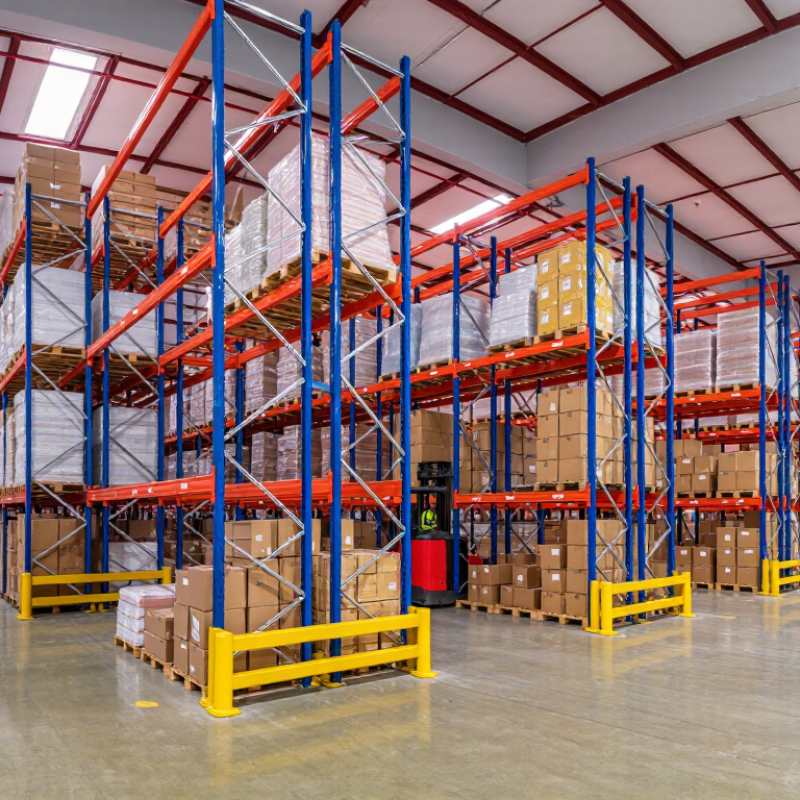
Impact racks are pallet-storage systems protected against accidental contact from warehouse vehicles. The phrase often describes conventional steel racking combined with upright guards, end-of-aisle barriers, or reinforced frame components. The rack stores palletized goods; protective elements absorb or deflect some low-speed impacts. They do not make a rack damage-proof. A guard can also shift a collision’s force into its anchors or floor.
The risk is practical. OSHA estimates that forklifts cause about 85 fatal accidents and 34,900 serious injuries in the United States each year. These figures cover forklift incidents, not rack strikes alone, but they show why vehicle separation matters. A scraped upright beside a busy aisle deserves attention. A dent can look minor. It may not be.
For rack design, the Rack Manufacturers Institute’s ANSI MH16.1 specification provides structural design criteria for steel storage racks. It is not a universal impact-resistance rating. Buyers should verify the rack’s load capacity, anchoring details, and compatibility with specified guards. After a collision, isolate visibly damaged bays and arrange a competent inspection before reloading. Keep clear aisle markings and inspect floor anchors, too. Small misses happen. Regular checks make them easier to catch.
Chinese manufacturers produce several impact-conscious pallet rack types, each suited to different handling patterns. Selective racks provide direct access to every pallet, making them practical for mixed inventory. Common options include reinforced uprights, footplates, and bolt-on column guards. These components help reduce damage from routine forklift contact. Details matter.
Drive-in racks store pallets in deep lanes, using less floor space but requiring careful vehicle positioning. Double-deep systems add storage depth while retaining access from the aisle. Push-back racks use inclined rails and nested carts, so pallets move forward as others are loaded. Each design involves trade-offs in access, selectivity, and handling skill.
Protection depends on more than steel thickness. A thicker upright is not automatically safer. Buyers should compare rated loads, beam connections, frame dimensions, and floor anchoring against actual operating conditions. Ask for drawings and documented load information, then confirm installation requirements with a qualified rack professional. Forklift impact remains possible, and guards may need replacement after a collision. A specification sheet alone can miss details such as uneven floors or narrow turning space.
Typical access-face count per storage lane
Selective, drive-in, and push-back lanes typically use one access face. Drive-through and pallet-flow lanes use separate entry and exit faces. Counts describe common layouts, not product capacity; actual configurations may vary.
Leading Chinese impact rack manufacturers support warehouses with pallet storage systems, protective components, and project-specific layouts. Their capabilities can vary, so compare more than quoted prices. Ask whether the supplier can provide dimensioned drawings, stated load capacities, and clear installation guidance. Check beam connectors, upright welds, and protective finishes on samples or inspection photos. Small details matter.
For global buyers, dependable communication is as important as production capacity. Share pallet sizes, forklift dimensions, aisle plans, and expected loads before requesting a quotation. A capable manufacturer should clarify assumptions and flag design constraints rather than simply approve every request. Review inspection records, packaging methods, and replacement-part availability. A catalog can look convincing; it cannot show how a rack performs in your warehouse. This is easy to overlook.
Tips: Request a sample connection and a written specification before placing a large order. Confirm that labels match the approved load data. Compare the final drawings with your site measurements, then have a qualified local professional review the installation plan. I would not skip that step.
For global buyers comparing impact-rack manufacturers in China, examine engineering evidence, not just catalog photos. Request drawings showing the rack layout, upright dimensions, beam connections, and the protection system’s rated impact capacity. Ask which standard governs the rack design, such as ANSI MH16.1 or EN 15512, and whether independent test reports match the model offered. Small details matter.
Compare products under the same conditions. A floor-mounted guard and a rack-mounted protector may behave differently when a forklift clips an upright. Check anchoring requirements, replacement procedures, coating durability, and whether the quoted load ratings account for the proposed configuration. OSHA estimates powered industrial trucks cause about 85 fatal accidents and 34,900 serious injuries annually in U.S. workplaces. That figure is not rack-specific, but it shows why impact protection deserves careful review.
Verify that certificates identify the actual factory, product range, and test method. Request material traceability, inspection records, and clear installation instructions. Confirm the manufacturer can supply spare protectors and technical support after delivery. No certificate tells the whole story. I would not treat a polished document as proof unless its test scope matches the rack being purchased; that is an easy detail to miss when comparing quotations.
When comparing Chinese impact-rack manufacturers, send the same brief to each supplier: pallet dimensions, load per level, beam length, clear aisle width, and forklift type. Ask for dimensioned drawings and rated-load tables before approving a quotation. MHI’s 2024 Annual Industry Report found that 55% of surveyed organizations planned to increase supply-chain technology investment. That broader shift makes warehouse layout compatibility important, but it does not replace rack-specific engineering checks. Request material specifications, coating details, inspection records, and written confirmation that the proposed design matches your site conditions. Small omissions matter. A beam that fits the drawing may still obstruct sprinkler clearance or forklift movement.
For customization, confirm whether the quoted price includes guards, anchors, installation guidance, and spare components. Agree on sample approval, production tolerances, inspection stages, and how changes are documented. One awkward detail: buyers sometimes approve drawings too quickly. Leave time for a local engineer to review floor conditions and installation requirements. For export, specify packaging, container loading plans, shipping terms, delivery milestones, and document responsibilities in the purchase contract. UNCTAD’s Review of Maritime Transport 2024 notes that shipping carries over 80% of global trade by volume, so port delays can affect arrival schedules. Request packing photographs and a complete document list before dispatch. Check landed costs, not just factory prices.
| Evaluation Area | Buyer Considerations | Information to Request | Ordering and Export Implications |
|---|---|---|---|
| Rack System and Application | Specify whether the project requires selective pallet racking, drive-in racking, narrow-aisle racking, or another system. The right configuration depends on pallet dimensions, handling equipment, stock rotation, and available building space. | System layout, pallet and load dimensions, forklift type, aisle width, storage-height requirements, and intended inventory flow. | Share a dimensioned warehouse plan before requesting a quotation. Changes to aisle widths or storage height can affect the design, quantities, and shipping volume. |
| Load Ratings and Design Basis | Capacity is not a single universal figure. It depends on the rack configuration, beam span, upright frame, load distribution, materials, connections, and site conditions. Seismic requirements may also apply. | Written beam and frame load data for the proposed configuration, design assumptions, safety factors, and the applicable local design code or standard. | Compare quotations only when they use the same layout and loading assumptions. Confirm that the final design suits the destination site's building and regulatory requirements. |
| Applicable Standards | Standards differ by market and purpose. Examples include EN 15512 for the design of adjustable pallet racking, EN 15620 for tolerances and clearances, EN 15629 for specification, and EN 15635 for use and maintenance. North American projects may use ANSI/RMI MH16.1. | Standard and edition used, design calculations, inspection or test reports where relevant, and a clear statement of the scope covered by each document. | Ask the supplier to confirm which requirements apply to the project; a reference to a standard alone does not establish that every product or installation meets it. |
| Steel and Components | Steel grade, section geometry, thickness, connection design, and component tolerances influence structural performance. These details vary by product and should not be assumed from appearance alone. | Material specifications, component drawings, connection details, tolerances, and traceability information where required by the project. | Include agreed material and component specifications in the purchase contract so substitutions can be reviewed and approved before production. |
| Impact Protection | Upright guards, frame protection, end-of-aisle barriers, and other protective devices can reduce the risk of vehicle impact damage. Their selection and placement depend on the layout and traffic patterns. | Protection-product drawings, dimensions, fixing method, compatibility with the rack, and a proposed placement plan. | Confirm whether protection is included in the quoted rack package or must be ordered separately. Check that guards do not obstruct pallet handling or inspection. |
| Surface Finish | Powder coating and galvanizing are common finish options, but suitability depends on the environment, exposure, and maintenance needs. A finish description alone does not specify coating thickness or corrosion performance. | Finish type, color code if applicable, preparation method, coating requirements, and any inspection criteria stated in the project specification. | Agree the finish in writing and request samples or documented checks if appearance or corrosion protection is important for the installation environment. |
| Customization and Drawings | Custom dimensions and layouts may be possible, but changes to beams, frames, bracing, or connections can affect engineering and load ratings. | Approval drawings showing dimensions, component identifiers, beam levels, clearances, loads, and the final bill of materials. | Approve the final drawings and bill of materials before production. Record revision numbers to reduce the risk of manufacturing or installation mismatches. |
| Inspection and Quality Records | Inspection arrangements should match the project's risk, specification, and contract. The existence of a factory inspection or test document does not by itself verify every shipment or installation. | Inspection plan, applicable quality records, packaging checks, and procedures for reporting and resolving nonconformities. | Define inspection timing, acceptance criteria, and responsibility for any third-party inspection before production begins. |
| Packaging and Container Loading | Racking components are commonly shipped in bundles or knocked-down form. Package dimensions, weight, protection, and loading sequence affect handling and container utilization. | Packing list, package dimensions and weights, loading plan, marking details, and instructions for unloading and storage. | Confirm container type and loading method with the freight provider. If wood packaging is used in international trade, check that it meets applicable ISPM 15 requirements. |
| Trade Terms and Import Costs | Incoterms® 2020 rules define certain responsibilities between seller and buyer for delivery, costs, and risk transfer; they do not determine product compliance or customs duty rates. | Quotation currency, named place or port, selected Incoterms® 2020 rule, shipping documents, and product information needed for customs clearance. | Verify tariff classification, duties, taxes, and import requirements with the destination country's customs authority or a qualified broker. These depend on the product and importing market. |
| Installation and Handover | Rack performance depends on correct installation, floor conditions, anchoring, configuration, and subsequent use within the approved load limits. | Installation drawings, anchoring details, assembly instructions, inspection guidance, and rack load notices appropriate to the final configuration. | Agree who is responsible for installation and site verification. Provide the final approved drawings and load information to the installer and site operator. |
| Commercial Terms and After-Sales Support | Warranty coverage, spare-part availability, replacement procedures, and response arrangements can differ between suppliers and contracts. | Written warranty terms, exclusions, claim process, spare-part list, and contact or response arrangements for technical support. | Record agreed terms, delivery milestones, packaging requirements, and remedies for shortages or damage in the purchase documents. |
Selective racks provide direct access, making them useful for mixed inventory. Reinforced uprights and column guards can help reduce routine forklift damage.
Drive-in racks store pallets in deep lanes and use less floor space. Double-deep systems add storage depth but still require careful aisle access.
They use inclined rails and nested carts. Loading another pallet moves stored pallets forward.
No. Compare rated loads, beam connections, frame dimensions, and floor anchors against actual warehouse conditions. Details matter.
Share pallet dimensions, load per level, beam length, aisle width, and forklift type. Request dimensioned drawings and rated-load tables.
Review floor conditions, turning space, and sprinkler clearance with a qualified local professional. A drawing can miss real obstacles.
Confirm whether guards, anchors, installation guidance, and spare parts are included. Agree on sample approval, tolerances, and inspection stages.
Set packaging, container loading, shipping terms, delivery milestones, and document responsibilities in the contract. Request packing photos and check landed costs.
No. Forklift impacts can still happen, and damaged guards may need replacement. I may be overchecking, but site details deserve another look.
Impact Racks are designed to absorb and distribute force in areas where forklifts and other warehouse equipment may strike storage structures. By helping protect uprights, frames, and stored goods, they can reduce damage and support safer, more reliable warehouse operations. Chinese manufacturers produce several configurations, including column protectors, end-of-aisle barriers, rack guards, and customized protective systems for different layouts and impact risks.
For global buyers, choosing a manufacturer involves comparing material quality, design options, production capabilities, quality controls, and relevant safety documentation. Buyers should confirm dimensions, load and impact requirements, finishes, installation details, and compatibility with existing racks before ordering. Clear communication about customization, sample approval, packaging, delivery schedules, export documentation, and after-sales support can help prevent misunderstandings. A careful evaluation of both the product and the supplier helps buyers select Impact Racks that fit their operational needs and purchasing requirements.

Maobang Storage